The New Zealand Curriculum (history and context)

So much of many students’ long-term success and achievement in school is determined by the the trajectory they get on at the very beginning of their school careers, which in turn is determined in large part by their pre schooling experiences.  (It is important to note that pre school learning environments do not only refer to preschools but rather all learning environments, which include homes and communities as well.)  My Fulbright capstone project is multifaceted, but the purpose is ultimately to improve student learning by aligning standards and practices between preschools and public elementary schools in order to create a more seamless transition for students between these two critical learning environments.   I am looking at broad education systems and policies as well as specifics about best practices in literacy instruction.

One of the many things that makes New Zealand the ideal place to conduct my project is that it has had a national curriculum since 1992.  Let me clarify that “curriculum” in this case refers not to a specific textbook or instructional program, the way we think of it in the United States.  “Curriculum” in this case refers instead to a set of national standards (an articulation of what they want students to know and be able to do) that are mandated for every school in the country by the Ministry of Education.  This is a little mind boggling for the US since our public schools are governed and funded by each state instead of at the federal level.  Keep in mind that New Zealand does not have states, and that it is actually more like the size of a state in the US–both population- and geography-wise.

New Zealand implemented their first national curriculum in 1992.  Acknowledging that there had been much social change over the next 8 years, the education system conducted a thorough 2-year review from 2000-2002, and–based on the findings–the Education Cabinet led a 4-year revision of the curriculum before implementing the current version of The New Zealand Curriculum in 2007.  They want to ensure that the achievement objectives are, “current, relevant, and well-defined.”

In addition to having a 23-year history with two versions of a national curriculum, New Zealand has also been on the cutting edge of literacy instruction and practice for the last several decades and–partly because of their size–they have been able to effect significantly positive change on a national level in a relatively short amount of time.  These aspects make New Zealand the perfect place to design a model that can be implemented in Oregon–or any other state–in the context of the Common Core State Standards.

Karen Sewell, who was Secretary for Education in New Zealand at the time of implementation of the new version of the New Zealand Curriculum had this to say about it:

The New Zealand Curriculum is a clear statement of what we deem important in education.  It takes as its starting point a vision of our young people as lifelong learners who are confident and creative, connected, and actively involved.  It includes a clear set of principles on which to base curriculum decision making.  It sets out values that are to be encouraged, modeled, and explored.  It defines five key competencies that are critical to sustained learning and effective participation in society and that underline the emphasis on lifelong learning.

What more could a country ask for from its future guardians of society?
The Boys Start School

I have now been on New Zealand ground for 26 days, and I still pinch myself to make sure I’m not dreaming.  It still feels surreal that I am here in this incredible country to study its wonderful and wondrous school system.  I have met so many very kind and interesting people, and I feel like each connection I make at the university has the potential to greatly enhance my capstone project.  I am currently awaiting ethics approval to be able to formally begin my research for my project, and in the meantime I have the great pleasure to experience a New Zealand primary school from a parent’s perspective.  **Spoiler alert: This post will likely end with. “I’m never going home!”**

Owen and Quincy's First Day of School

Owen and Quincy’s First Day of School

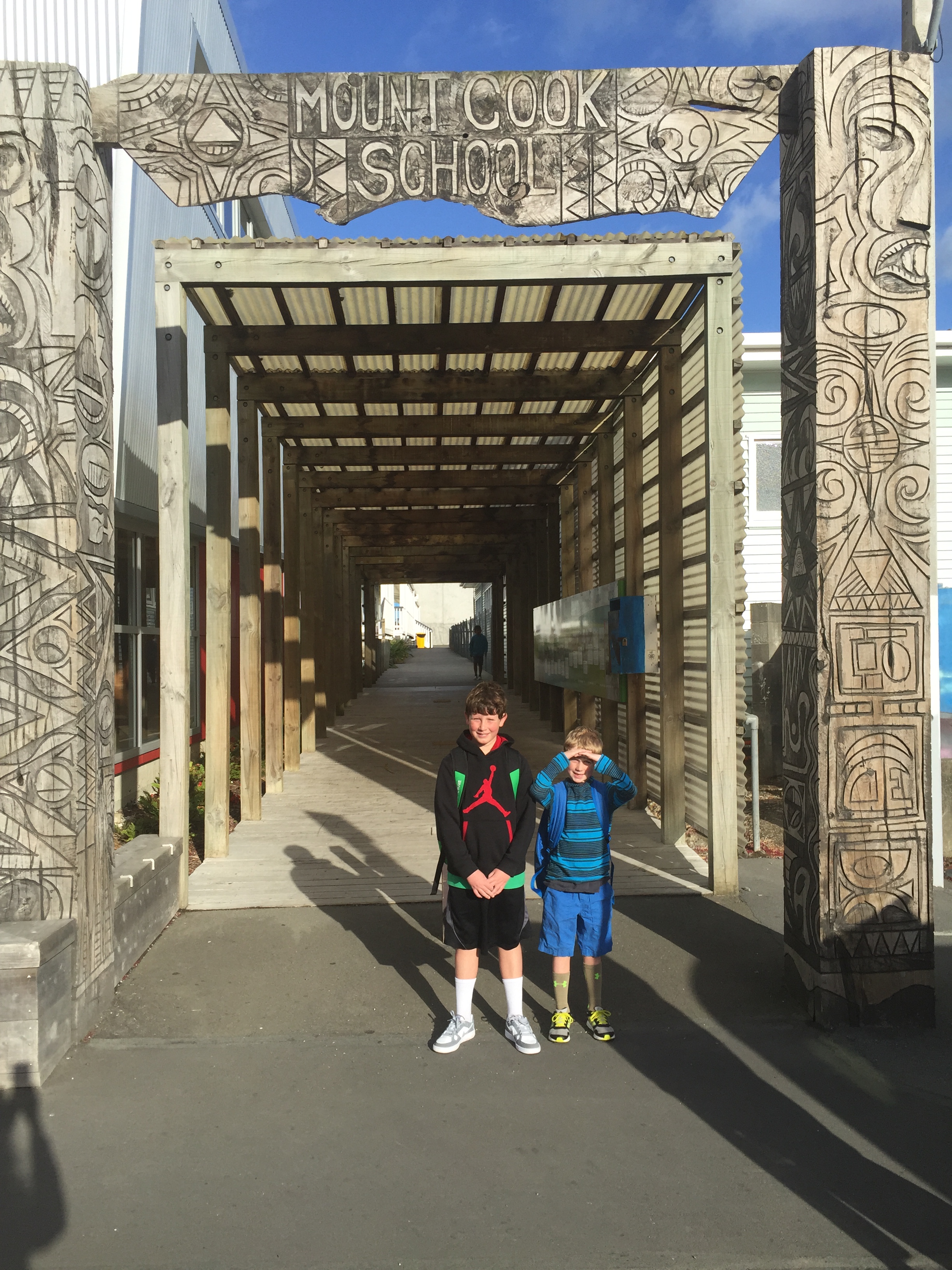
Owen (who will turn 10 in March), and Quincy (age 7) began school at Mt. Cook primary school the week before last.  They are both in blended age classes, which is perfect since they have just come from the first half of a school year to do another first not-quite-half of a school year.  I reflected on the fact that it seemed more than a little ironic that we came to New Zealand–the outdoor and adventure capital of the world–to live and have the boys attend school right in the urban heart of Wellington.  We are two weeks into the boys’ NZ school chapter, and here are some of my first impressions and highlights.

An Urban Oasis

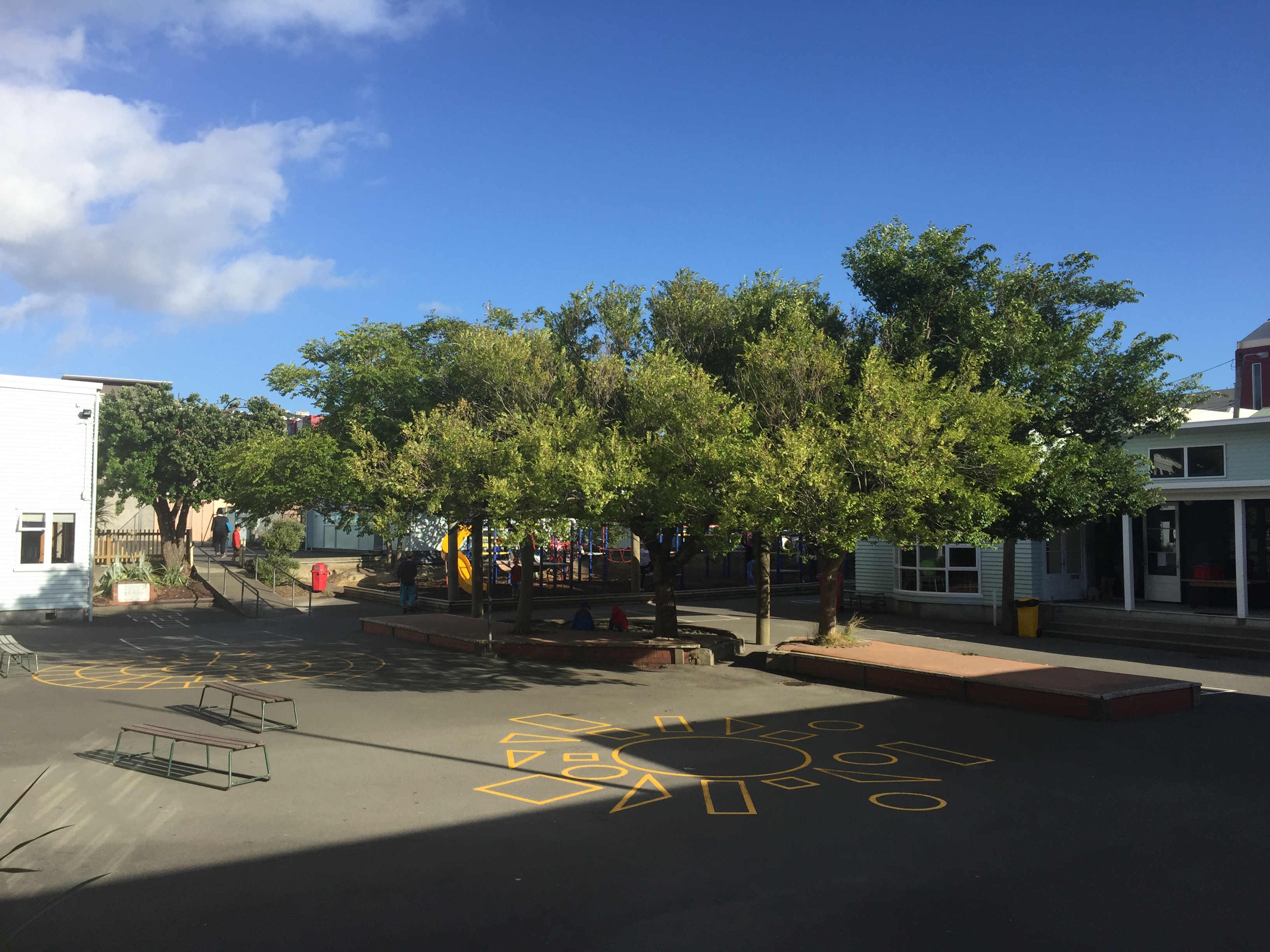
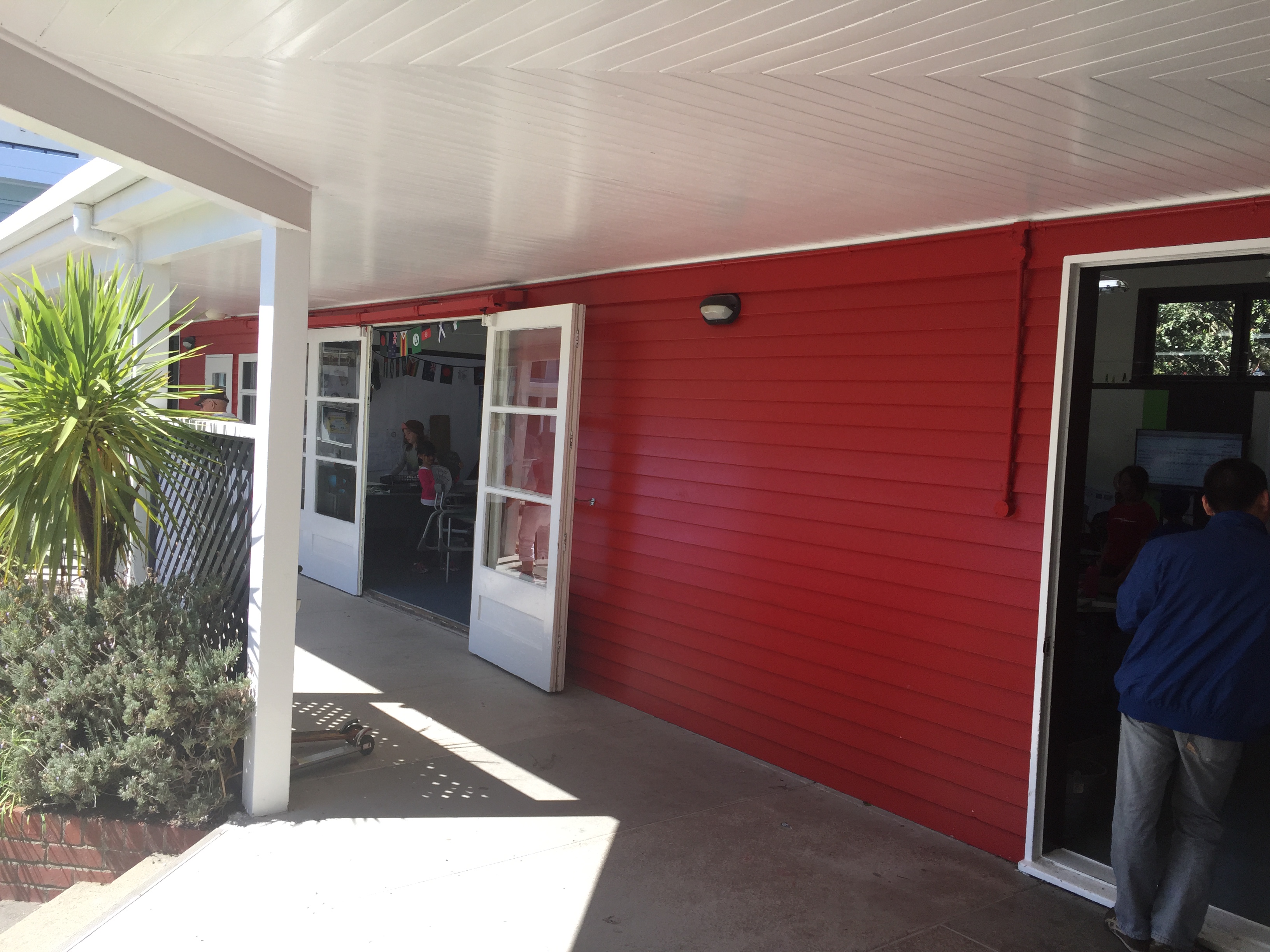
This downtown school in the middle of the capital city of New Zealand is a calmer setting than our school at home which is on the edge of Corvallis (a small university city in Oregon).    The buildings of Mt. Cook envelop a paved courtyard playground.  There are more paved courts to the side and a field adjacent.  The doors of the classrooms are huge windows and open like barn doors, so right now, in the warmth of late summer, the classrooms are often open-air.  There are large trees to climb (yes, CLIMB!! 🙂 ) and a fun play structure as well.  You step off the city sidewalk onto the grounds of Mt Cook and you could just as easily be in a country setting.

Mt. Cook School courtyard

Mt. Cook School courtyard

Owen's classroom with the wall doors open

Owen’s classroom with the wall doors open

A Warm Welcome

I think the thing that struck me the most was how at-home we instantly felt.  Owen and Quincy both immediately wanted Mt Cook to be their school, and Brady and I felt as at home as they did.  The staff and students all made us feel very welcome from the first moment.  On the boys’ second day at Mt Cook, there was an all-school powhiri (see my post about our visit to the marae for an explanation of a powhiri) to officially welcome new students, families, and staff to the Mt Cook community.  The feeling inside as I looked out at the entire school singing a waiata to us in Maori is one I will remember and treasure long after we return to the United States.  The sense of community was very strong, and I felt very honored to be enveloped into it.  At the end, we new families and staff lined the wall, and the students, staff, and families came by in a receiving line format each greeting each of us with a hongi.  What better way to bring new people into a community than to share a breath?

(I’m not posting pictures of the powhiri because I don’t have any without student faces, and I don’t have permission to post.)

A Day in Nature

On Thursday of the boys’ first week of school, I got to attend the all-school, all-day picnic.  I know!  Can you believe it??  A few of my fellow Fulbrighters and I were welcomed to tag along, so we showed up at school and happily boarded one of the city buses that had been reserved for the field trip (no school buses here!) and rode the twenty-ish minutes to Khandallah Park where the whole school was to spend the entire day.

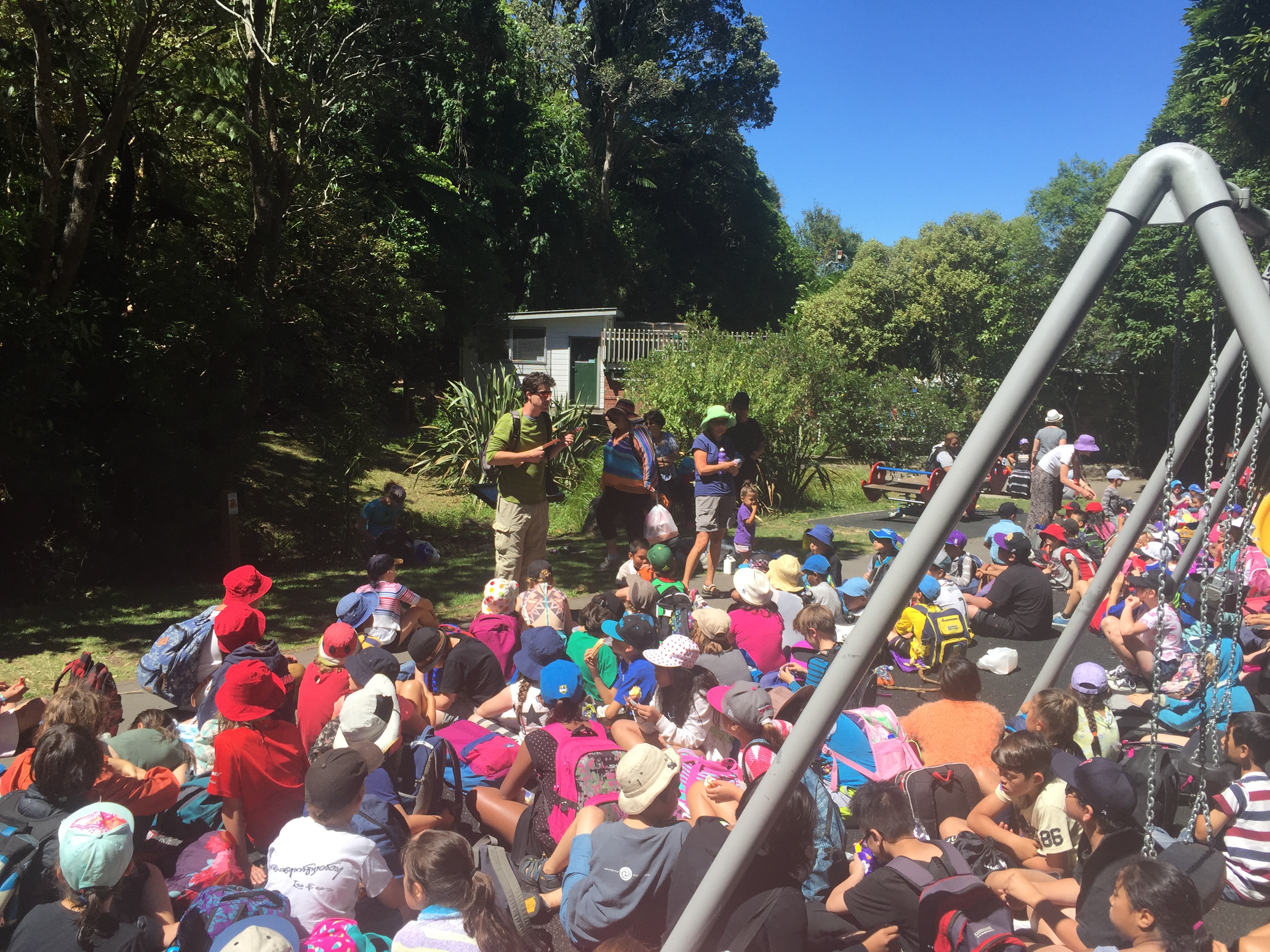
We paraded from the buses to the playground with very happy children who were armed for the day with snacks and togs (I’ll give you until the end of the post to guess what “togs” are).  Once everyone was seated, the principal addressed the entire school and asked if everyone knew what the MOST IMPORTANT RULE was.  Replies of, “Stay within the boundaries” and some other logical guesses involving safety were rejected, leaving even myself a bit perplexed.  I was standing next to Seth, a fellow Fulbrighter, and we turned to each other with matching expressions, mouths agape when we heard her proclaim that the most important rule was, in fact, to HAVE FUN!  This was followed by clear expectations about boundaries, and some simple instructions for all those wanting to climb Mt. Kaukau, and then the children were turned loose for their day of fun and exploration.

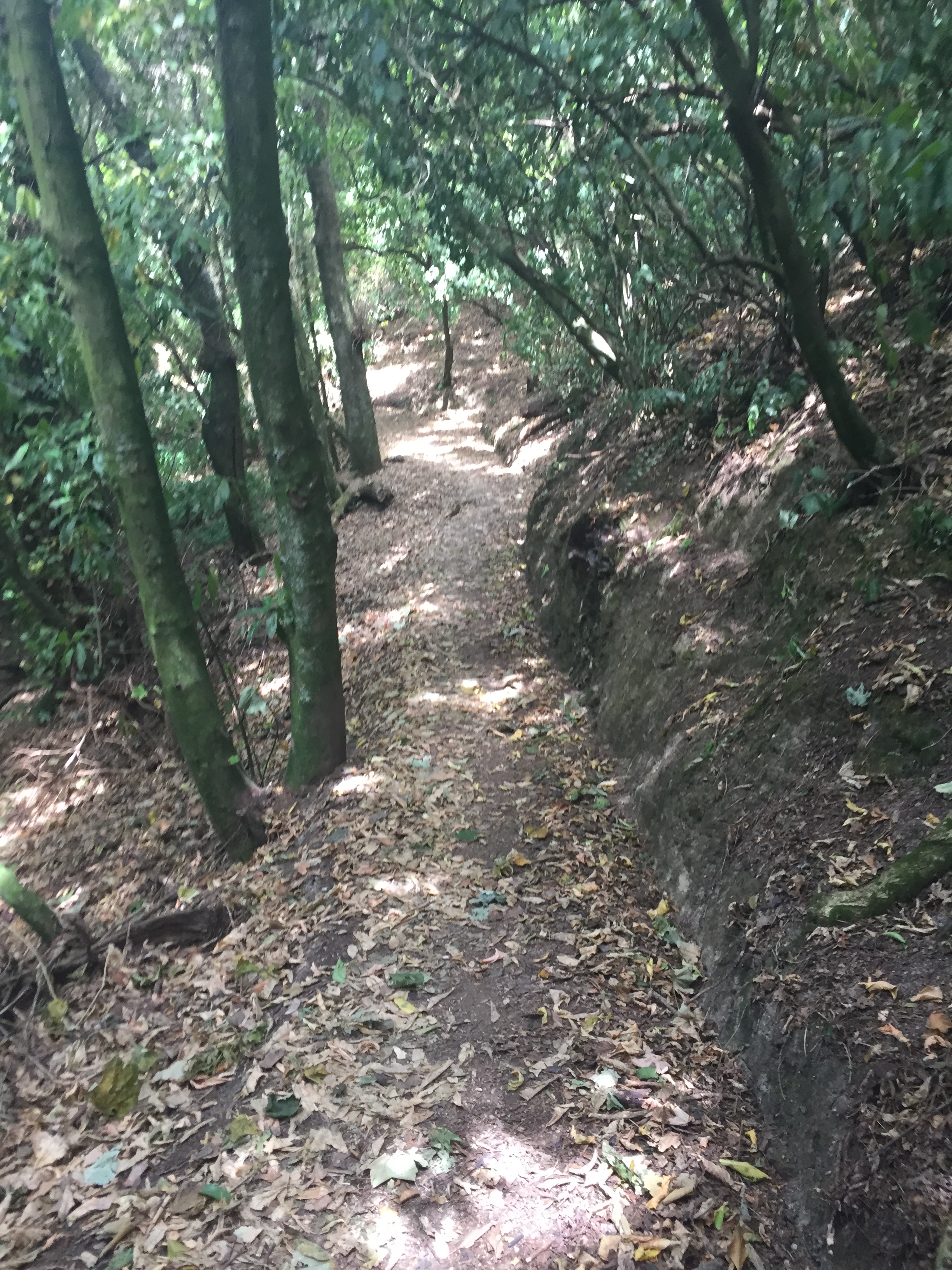
1/3 of the school at a time were invited to swim in the outdoor pool, there were two scientists from Te Papa (the National Museum of New Zealand) there to answer questions and explore the stream with any students who wished.  (Yes, they were allowed to be in the stream!), there was sports equipment available, and, of course, the park’s playground equipment.  I elected to climb to the top of Mt. Kaukau, which–at 445 metres above sea level–is the highest point in the Wellington harbor.  We ascended through beautiful fern forest along a creek until we reached the bald top of the hill and were treated to 360-degree views of the Wellington harbor as well as the Rimutaka and Tararua mountains.  And we even had a crystal clear view of the South Island (a rare treat, we were told by the locals–even on a clear day)!  I must admit I somewhat guiltily relished in the rarity of being on a field trip but not having any responsibility for students, so I lingered at the top taking pictures for quite a while.

Students and adults at the top of Mt. Kaukau.  Wellington Harbor in the distance.

Students and adults at the top of Mt. Kaukau. Wellington Harbor in the distance.

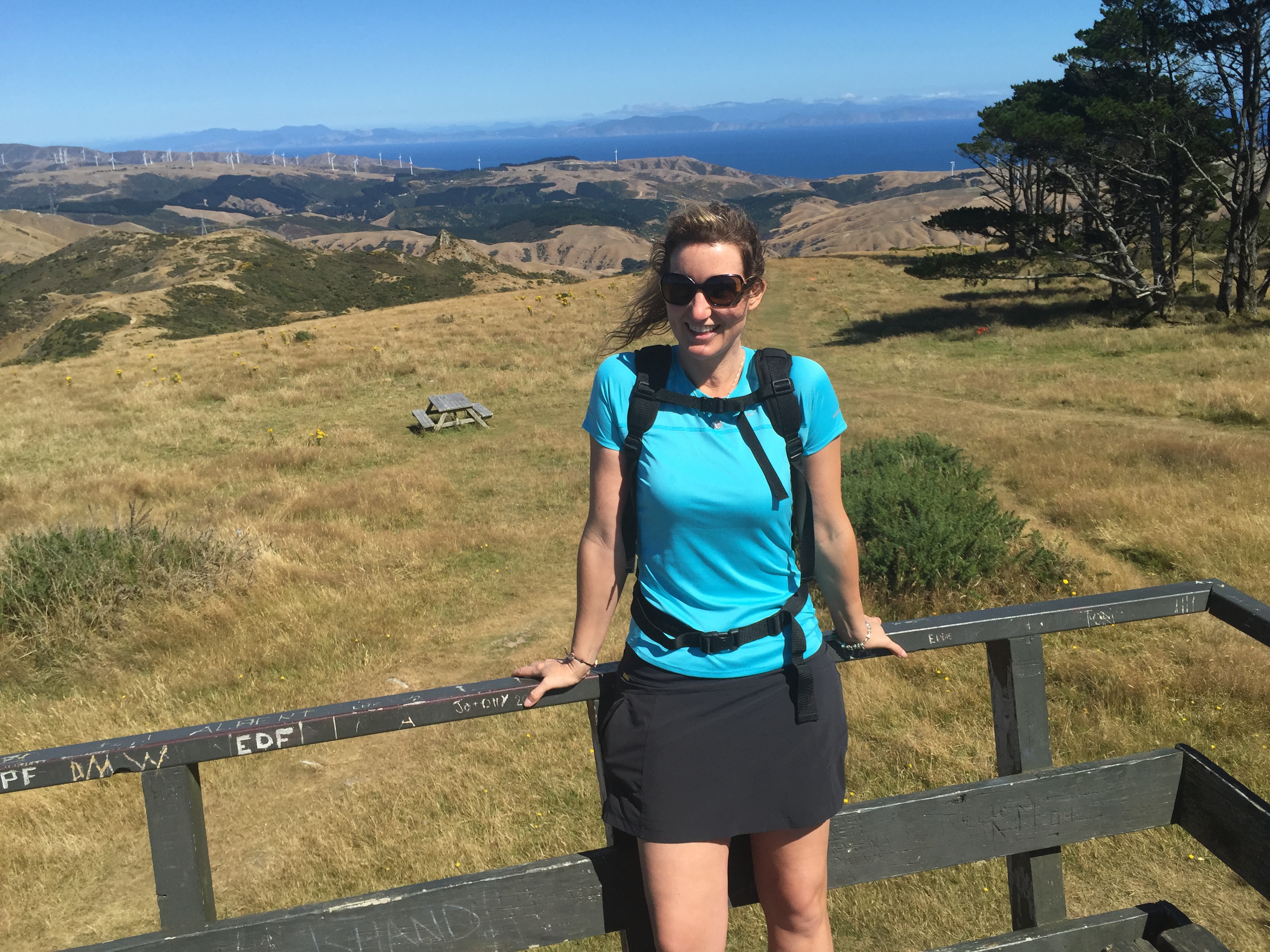
Shahnaz at the top of Mt. Kaukau.  South Island in the distance.

Here I am at the top of Mt. Kaukau. South Island in the distance.

Eventually I descended to the play area and the school of children and their adults.  I came upon a wonderful scene.  Children–many of whom barefoot because that is allowed here–were participating in a large variety of self-selected activities: playing various sports in a field, exploring in the stream, waiting patiently in line for their turn on the flying fox (zipline), running in and out of trees, flying down–and even off the end of–the slide, swimming in the pool, and others yet eating their lunches.  One of the teachers who was positioned near one boundary edge asked me if I was horrified by the looseness of the rules.  “Absolutely not,” I replied, “as a parent and a teacher, I am so happy to see them have the freedom to be children!”  And in my head, I thought to myself, “I’m never going home.”


Seth Hoffman singing his song "Nature" with Mt. Cook School at the end of the field trip

Seth Hoffman singing his song “Nature” with Mt. Cook School at the end of the field trip

Togs!


Peaks and Valleys

IMG_0671

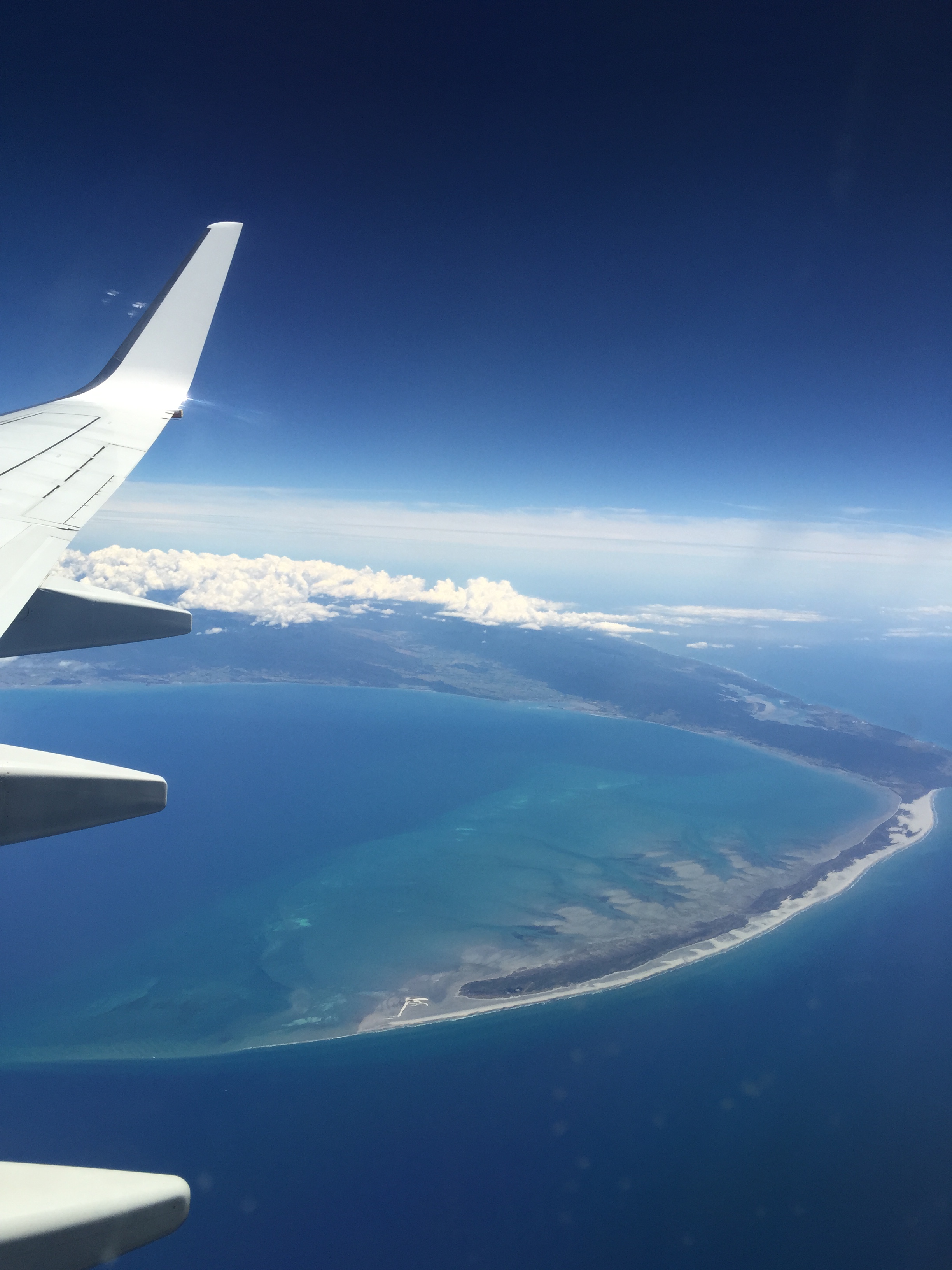
Last week–roughly 8 months and one week after finding out that I was the recipient of a Fulbright Distinguished Award in Teaching–I finally journeyed to New Zealand.  And, really–factoring in the span of time for the application–it was over a year’s wait.  Over a year of imagining the sights, sounds, tastes, feels, and smells of this majestic new-to-me country.  I have formed a New Zealand Bucket List that is too long to detail in this post, but will hopefully come to fruition over the next 4 months.   Somehow however, in the midst of my anticipation of the exquisite literal peaks and valleys of New Zealand, my mind glazed over the inevitable reality that there would be figurative peaks and valleys to match.  I have imagined myself visiting schools and working with kiwi teachers, climbing glaciers and tramping to huts, participating in a Maori Powhiri and kayaking with dolphins, but I forgot to picture the less desirable aspects of starting life in a new country.  You know…things like banking and figuring out the bus system (when one bus ride costs $5!).  I landed here three days ahead of my family with a simple enough to-do list.  It only had 4 things on it: phone, bank, house, school.  Sounds simple enough, right?  I either grossly overestimated myself or underestimated the systems here.  Probably a little combination of the two.  Regardless, here are a few nuggets that may help you the next time you find yourself moving–even temporarily–to New Zealand.

1. Phone. (peak)  Thankfully I planned ahead and arrived in NZ with an already-unlocked phone.  It was extremely simple to suspend my US service online and head out to buy a prepaid SIM card.  Bonus (unexpected) peak: despite having read that New Zealand had slow an unreliable internet, not only is it fast and reliable, but it is free in many places all over the city.  Thank you, Wellington!  More bonus peaks: whatsapp and FaceTime.  So happy to have these great free (other than data) options to keep in touch with my family and friends back home and all over the world!

2. Bank.  (valley) We planned ahead, set up our account when we were still in the US, and even wired the money so it would be waiting.  I figured this would be easy to check off my list, but it turned out that I had to have a rental agreement (more on that in a moment) in order to activate the account.  Also, my husband and I will need to appear together, and it will probably take an hour.  Since we are now 2 hemispheres away from our built-in babysitting gaggle of grandparents, this means we will have to take our kids with us.  Note to self: feed the children immediately prior and bring something for them to keep themselves occupied.  Consider resorting to some sort of bribe to elicit their best bank behavior since they have never been inside one before.  Hope that Quincy does not suddenly put on a bank robber act.

3. House.  Ugh. (big, long, deep valley eventually ending in a peak)  I’m going to keep this short.  Basically, if you’re coming to Wellington to live short-term, you need to do one thing: lie.  This is actual advice from a rental agent here.  I didn’t do this, and I think I would have saved myself a ton of time and effort and frustration if I had.  I will spare you the details, but rest assured we will have a place to live.  Literally the ONLY possibility out of many tens of inquiries.  Great opportunity for the boys to have a downtown city living experience as we are right in the heart of Wellington.  Come visit!  We will happily make room in “The Shoebox” for you!

4. School. (still up in the air, but should be a peak regardless of how it turns out)  We are waiting to hear later this week if there will be room at the school where we are hoping to enroll the boys.  We walked to the school on Monday hoping to check it out.  We walked through busy downtown Wellington, and then turned off onto a small street.  After one block we found ourselves in front of the oasis of a very sweet looking school.  The boys fell in love at first sight.  The best news is that we are in New Zealand, and the whole reason we are here is because of how incredible the schools and education system are here.  And, as a member of a local school board assured me, there are no bad schools in Wellington, so wherever they end up will be great.

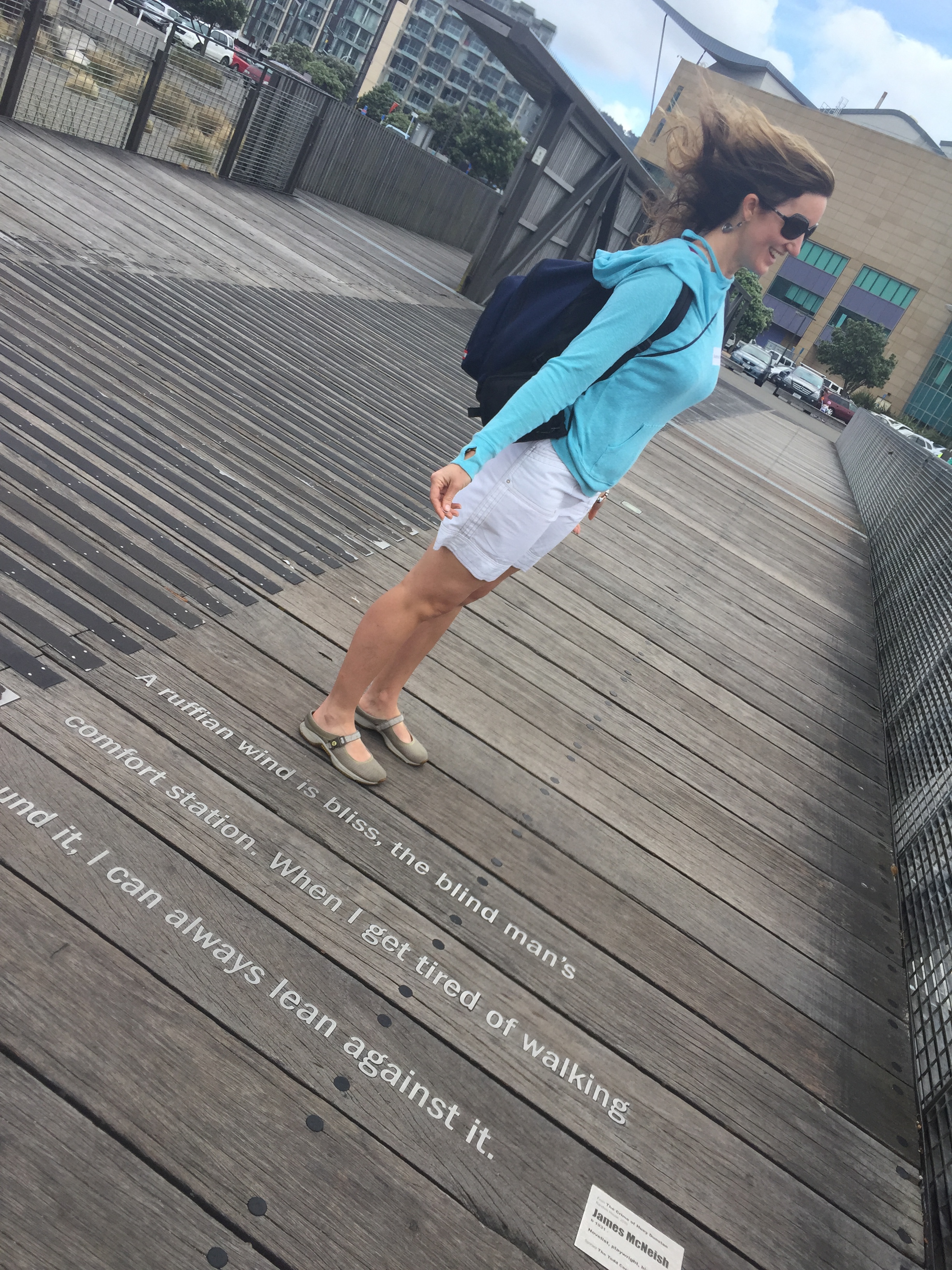
5. Weather. (peak…valley…peak…peak…valley…peak…val–get the picture?)  Wellington put on its best outfit for my fellow Fulbrighters and me the day we arrived.  We were greeted by 80 degree sunshine with a light breeze.  We were told by multiple people that day how rare this hot, dry summer weather had been.  As I looked out at the all of the people sunbathing on the beach and swimming in the flat water of the bay, it was hard to imagine where the nickname, “Windy Welly” could come from.  I think Wellington took that as a dare and has now shown me on several different occasions just how it earned that name…and just to put an exclamation mark on its message, it rained sideways on Monday!

IMG_0967

Windy Welly


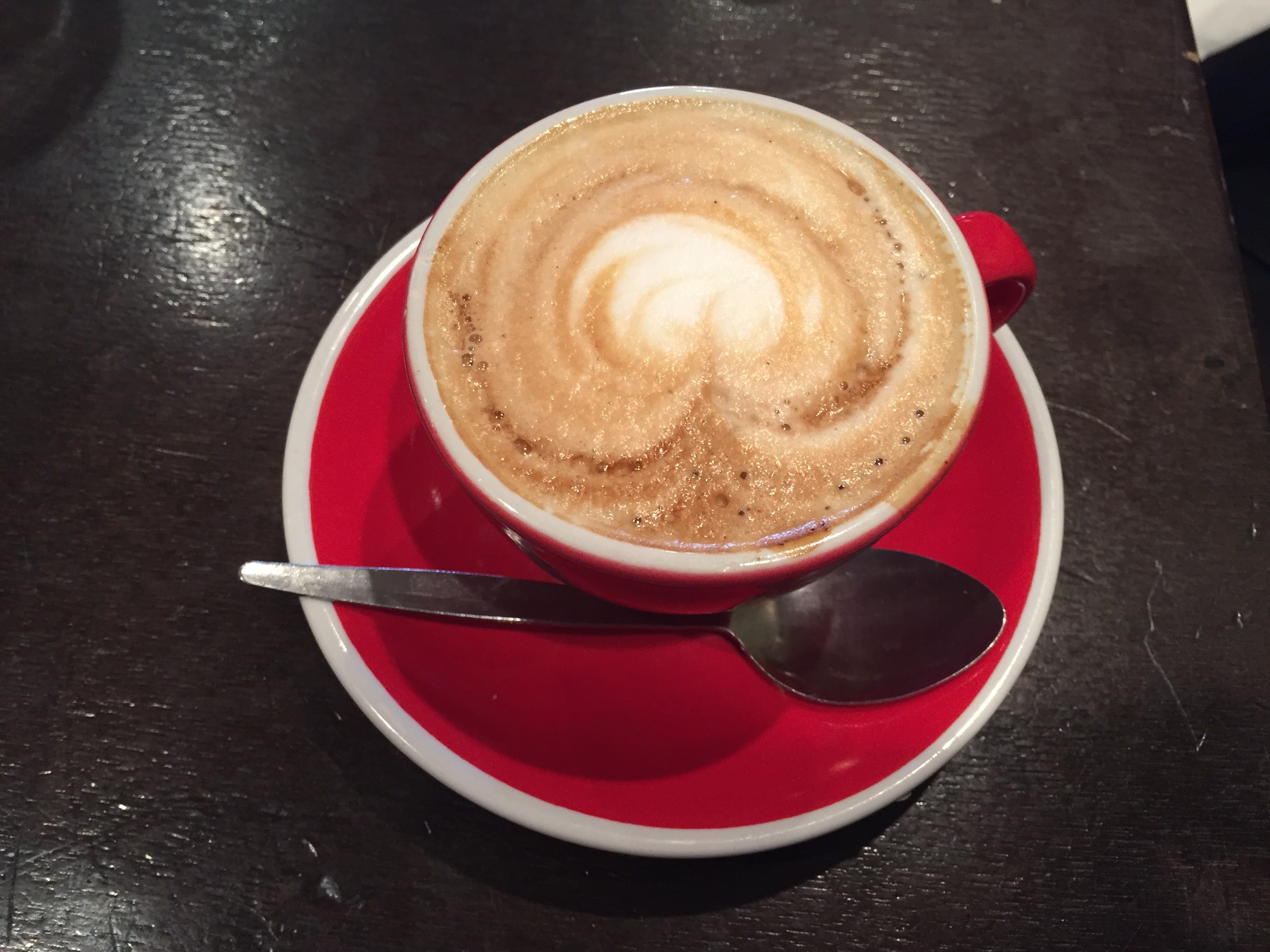
6. Coffee. (peak)  I have traded in my morning latte for a flat white.  De.LISH.ous!  My new fave!  And the kiwi baristas are a treat too!

IMG_0814

Flat white


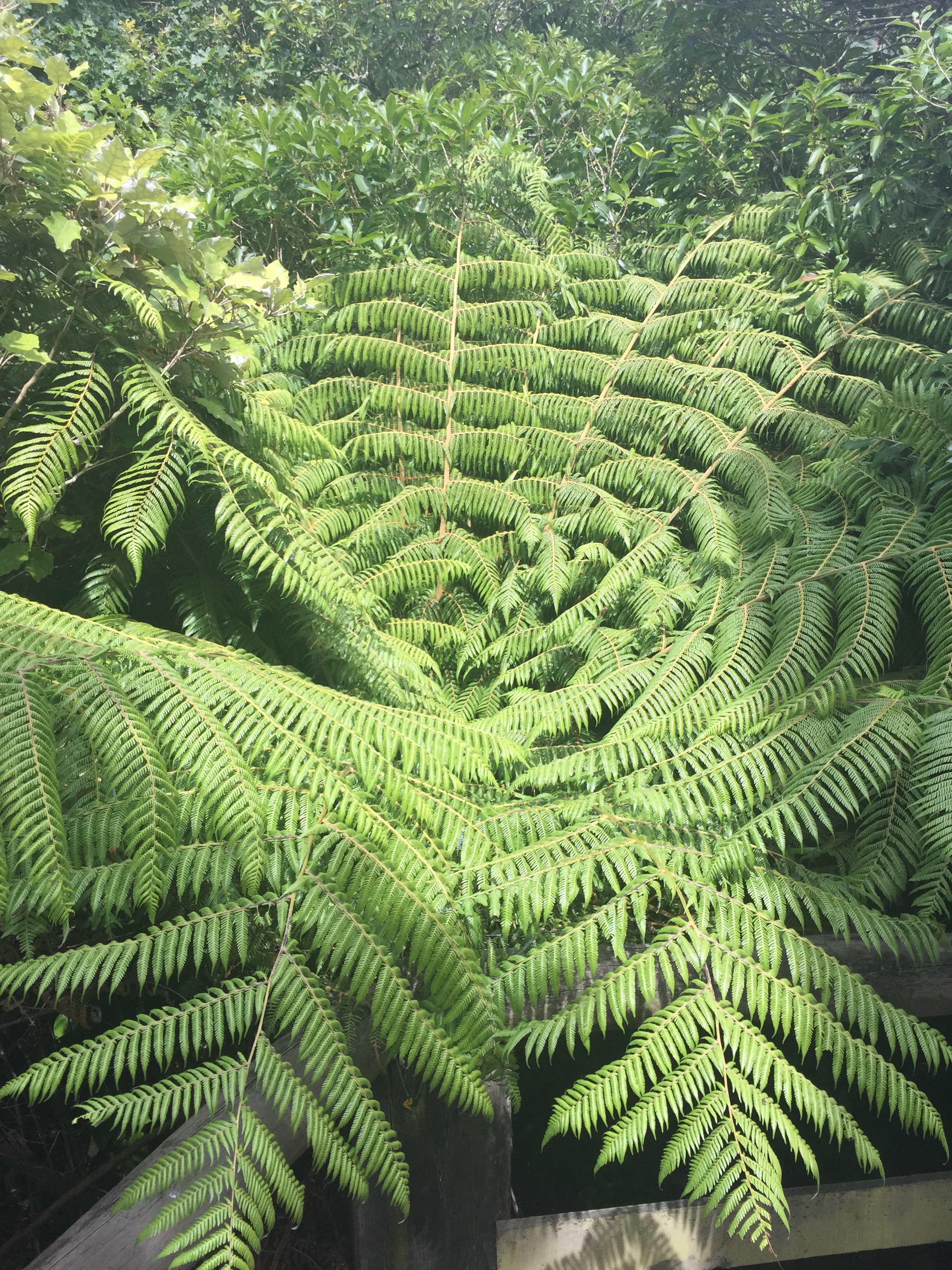
7. Wellington. (peak) I have walked all over this city, and I love it!  It has so many different pockets, each with its own feel and character.  And it’s very compact, so as you traverse the city, you seamlessly go from one unique area to the next.  You can even find yourself in the heart of downtown one minute and surrounded by nature the next.

IMG_0754

Gigantic fern

IMG_0751

One minute I was downtown, and the next minute here!


Yes, there have been some should-have-been-expected challenges, but that is part of what makes an experience like this worthwhile.  And, even after rehashing the “house hunting horrors,” I am sitting here thinking I should rename my blog to “Never going home!”  I love you already, New Zealand. Kia ora!