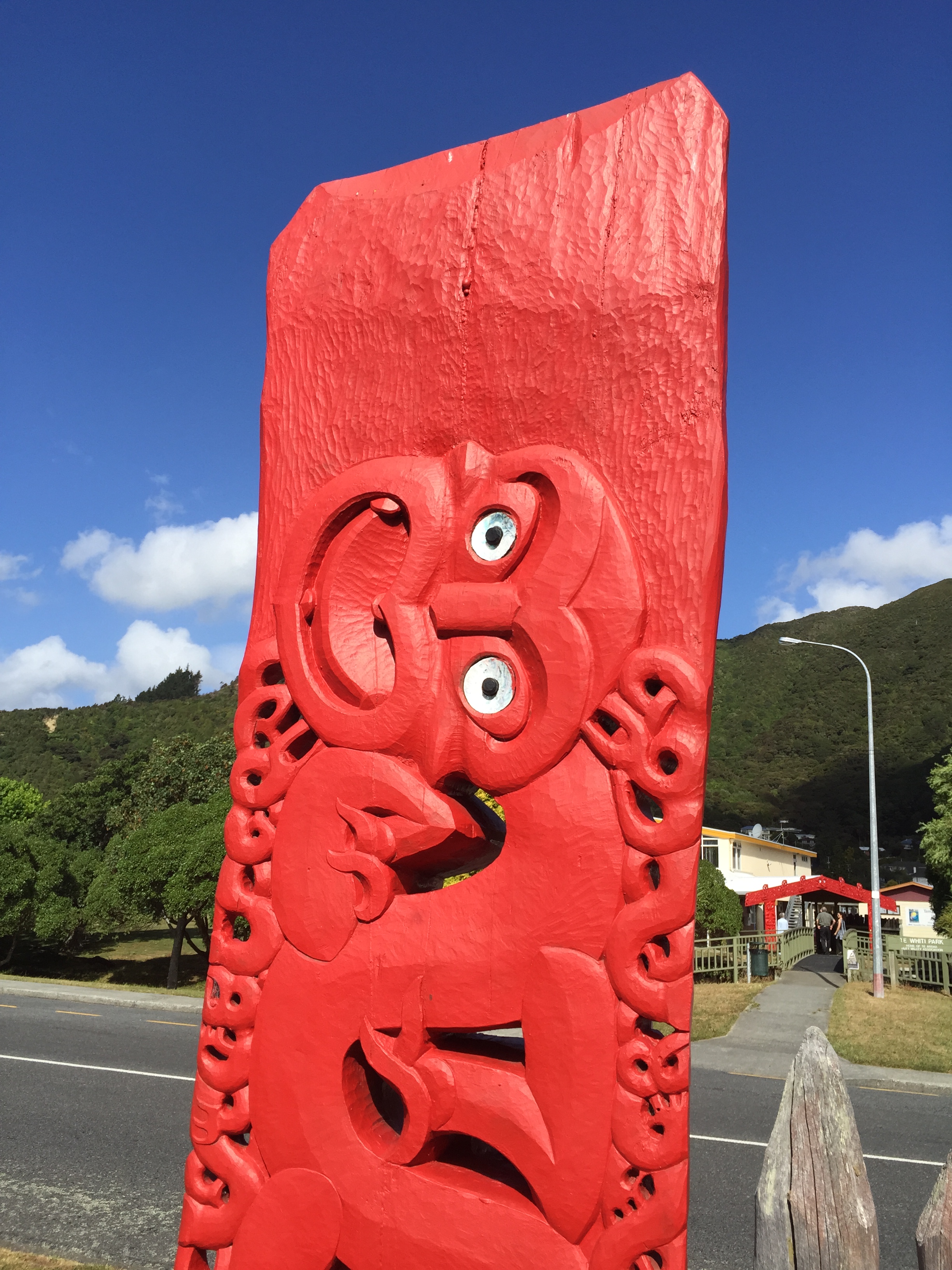
Orientation week brought the Fulbright teachers together with the other Fulbrighters and Axford Fellows who have just arrived in New Zealand from the US. Our schedule was jam-packed with speakers about the history, culture, politics,and even flora and fauna of this unique land. I gained a more in-depth understanding of New Zealand with each session and appreciate very much each of the speakers that came to present his or her area of expertise to us. But what stood out as the utmost highlight of an all-around exceptional week was the visit to the Waiwhetu marae.
A marae is a Maori tapu (sacred) ground where religious and cultural events take place. Like many sacred meeting places, marae customs are steeped with tradition and ceremony. We had the incredible honor of being prepped for our visit to the marae by Sir Tamati Reedy and Lady Tilly Reedy, very highly regarded elders who have accomplished many political and social gains for Maori people on a national level. Sir Tamati and Lady Tilly taught us some basics about the Maori language and culture and then trained us for the powhiri (POE-fi-ree), the traditional welcome ceremony for visitors at a marae.
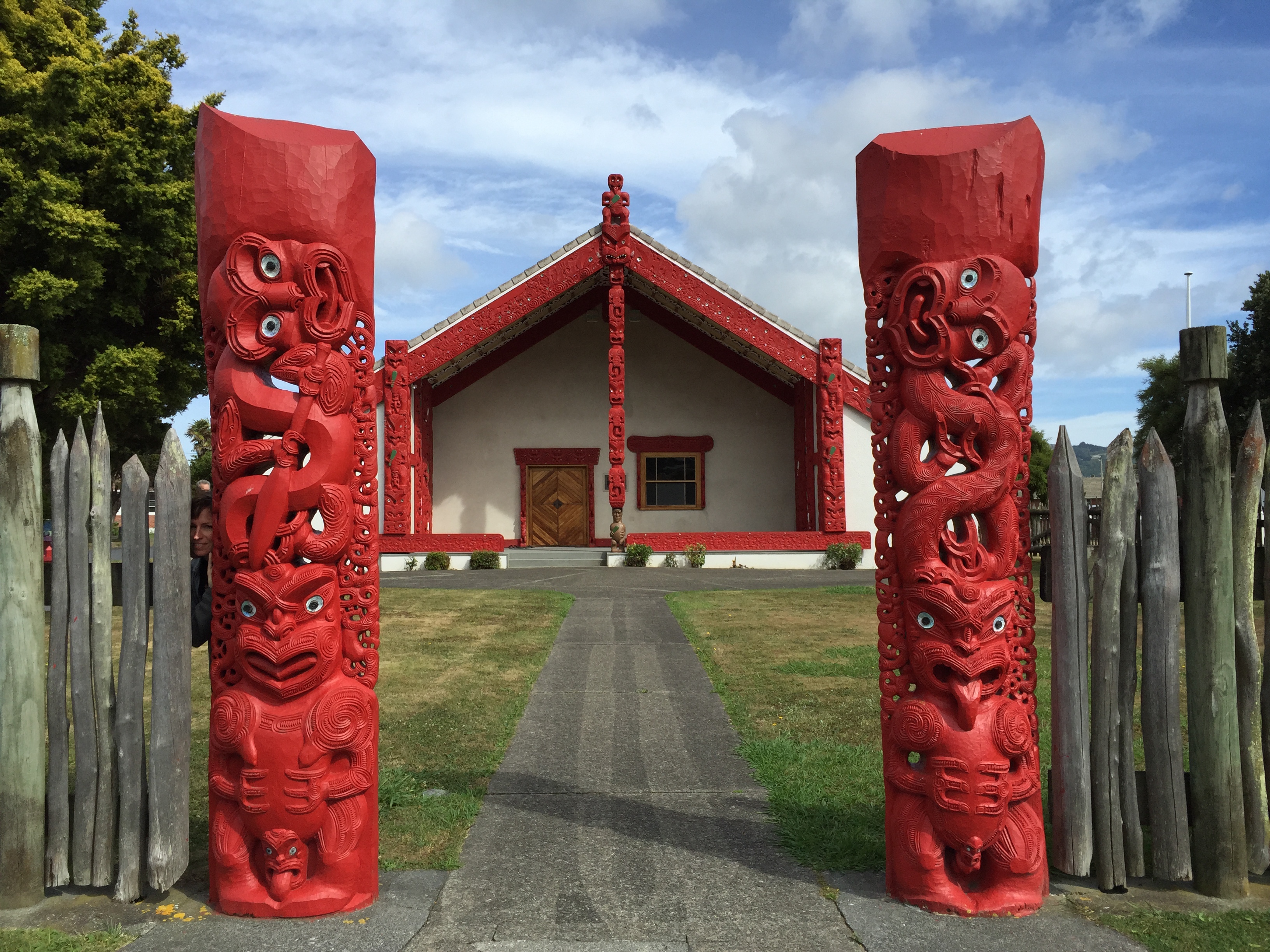
Waiwhetu marae
Powhiris vary a little bit from one marae to the next, but they generally all consist of the visitors waiting outside the gate to be called onto the marae grounds. There are protocols for who does the welcome chant and the response chant, who enters first (women first onto the grounds, but men first into the wharenui (the meeting house building on the grounds of the marae). You always remove your shoes before entering the wharenui, and as you enter you are greeted with a hongi, which is the touching of noses. The hongi symbolizes the exchange of breath between the two people. (Sidenote: We saw the Hobbit movie here a few nights ago, and I noticed that Peter Jackson incorporated a hongi into the movie.) Once inside, the ceremony continues with formal welcome and thank-you speeches (first in Maori and then translated into English if need be), waiata (songs), and a gift from the visitors to the hosts.
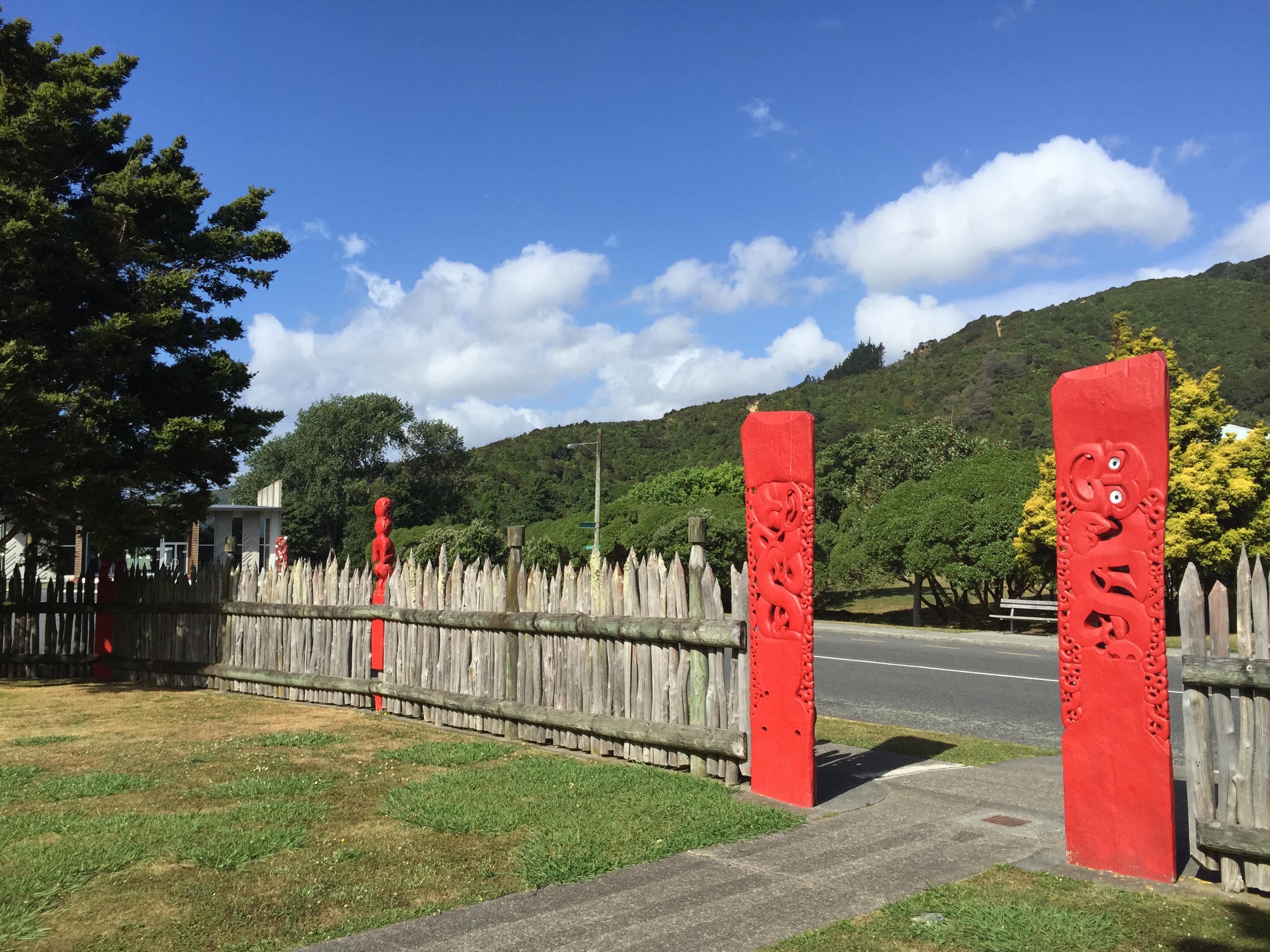
Visitors wait outside the gate until they are called onto the marae.
Maori culture and tradition places huge importance on and therefore pays homage to ancestors. This can be seen in their ceremonies, in the buildings and grounds of the marae, and in their art. Part of the powhiri ceremony involves acknowledging the ancestors of the people of the marae as well as those of the visitors. The wharenui itself is a symbolic representation of the ancestor of that tribe. The head is outside above the front door and usually facing the sunrise. The center beam represents the back bone, and the side beams come out like ribs. So when you are inside the wharenui, you are protected inside the embodiment of the ancestor. There are carvings, paintings on the beams, and woven panels throughout the inside, and each pattern represents specific ancestors or aspects of nature.
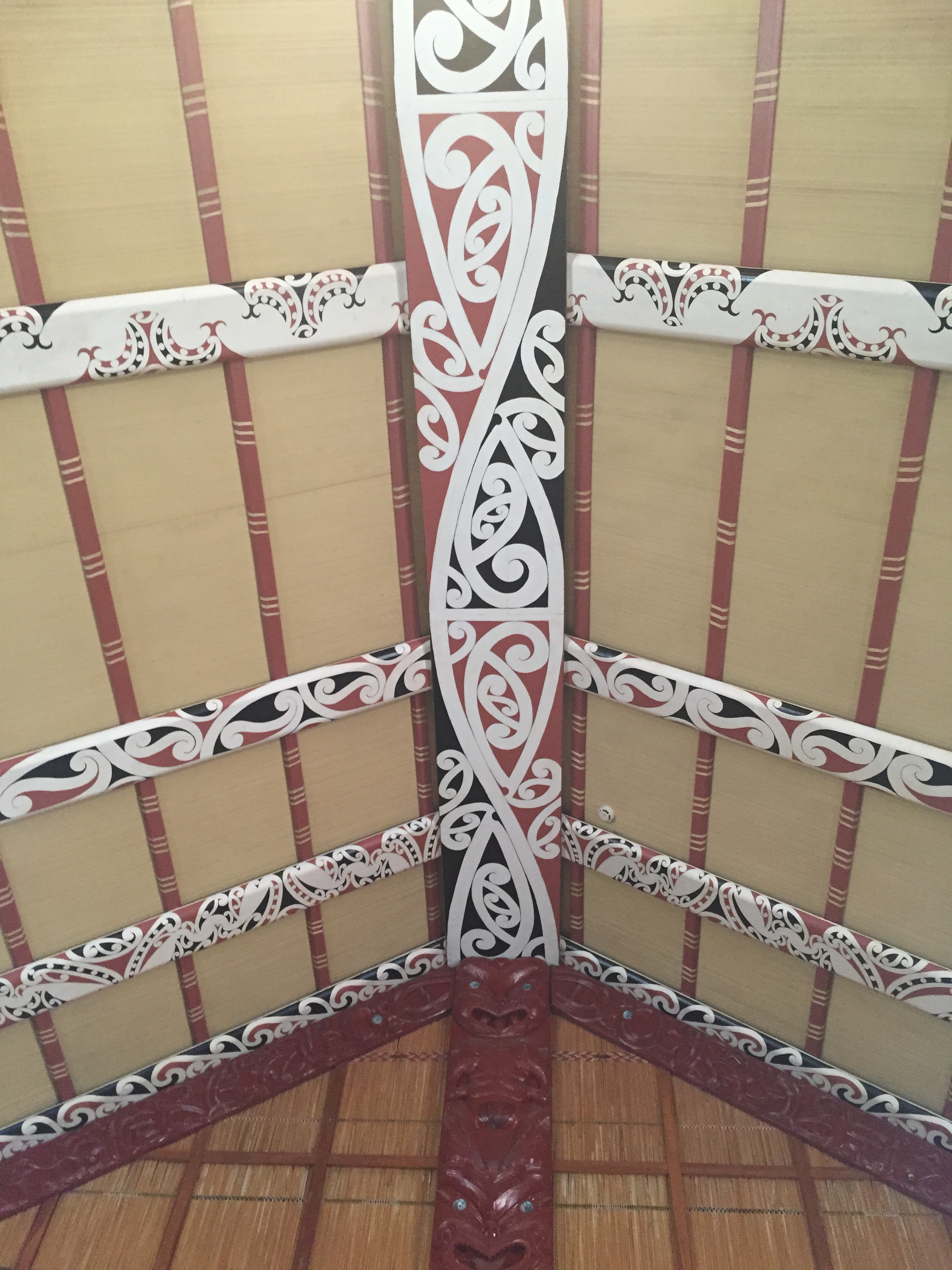
Spine and rib beams in the Waiwhetu marae
We learned more in-depth about Maori culture and art. We even got to get in their waka (hand-carved canoes) and have a rowing lesson! We learned about the peopling of the Pacific and the many commonalities amongst the earliest inhabitants of these island lands. (I was also struck by the similarities between the Maori and the Native Americans of the Pacific Northwest despite the vast distance across the Pacific Ocean.) And we learned about the political history of New Zealand through a Maori context. They invited our families as well, so Brady, Owen, and Quincy took part in the marae experience as well. The entire experience on the marae was profound, and I am so honored to have had the opportunity to be welcomed there!
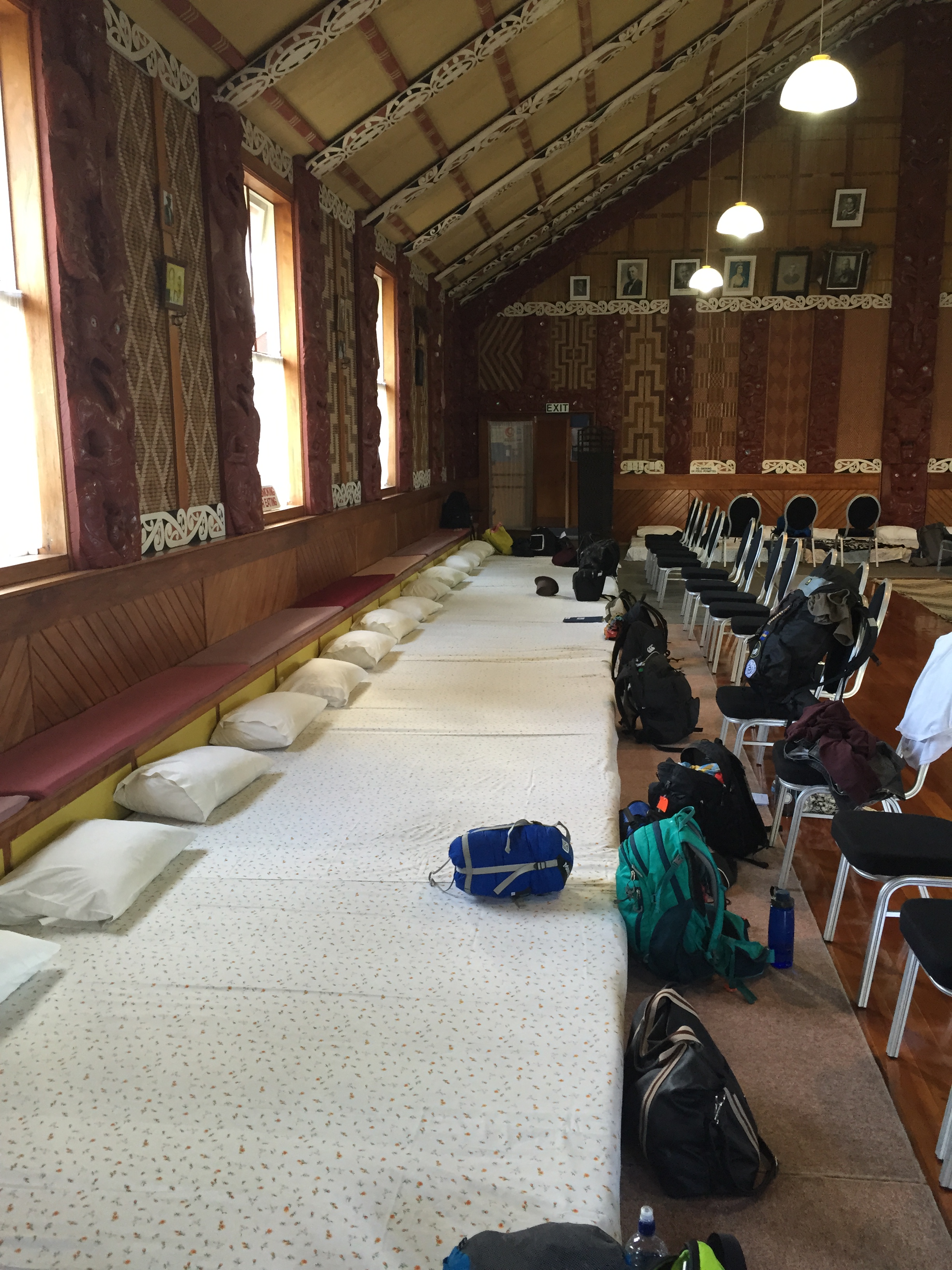
We all slept on these mattresses arranged inside the marae.
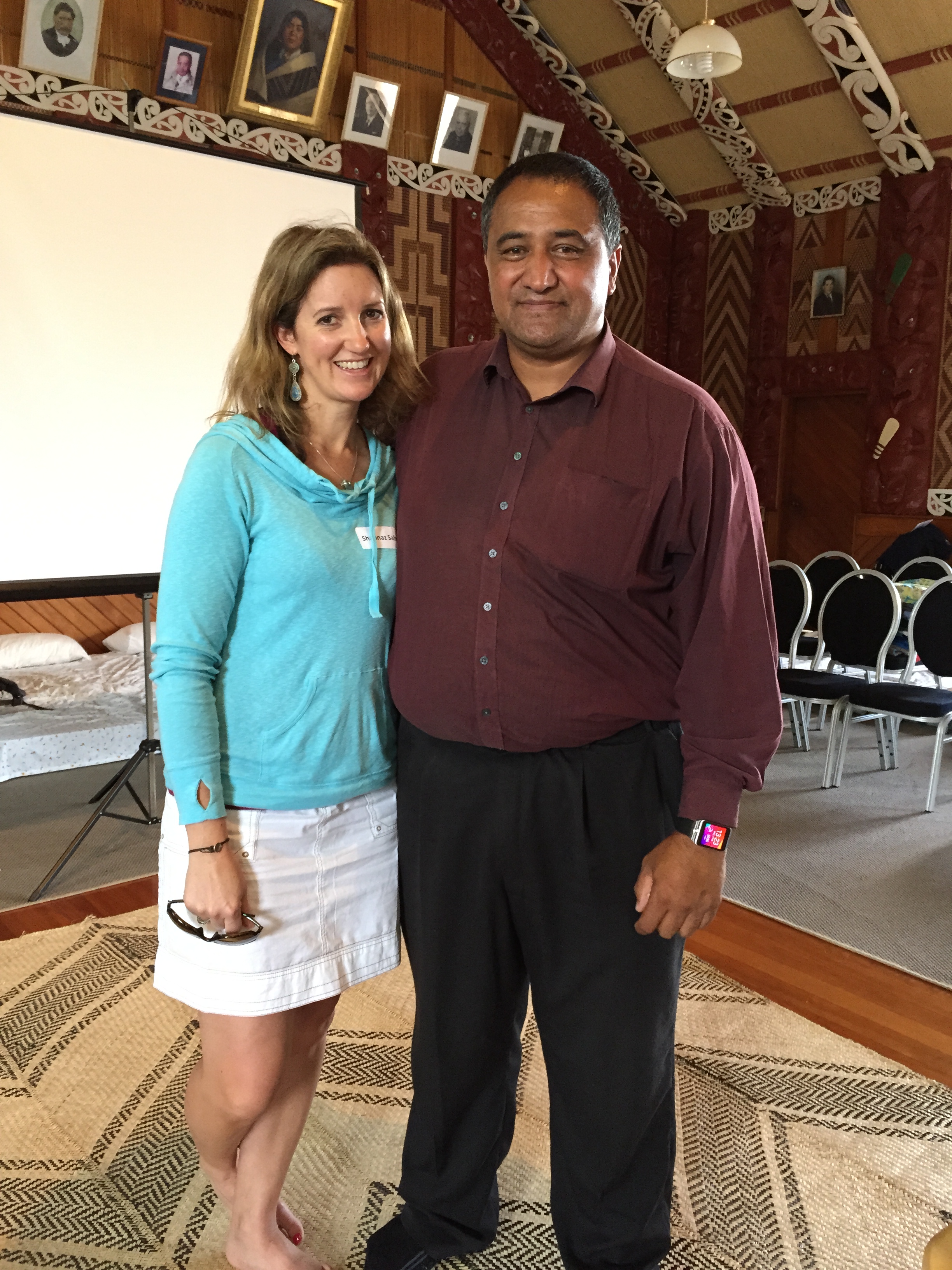
Here I am with Kura Moeahu, the Chairman of the Waiwhetu marae.
 Adventures in learning, adventures in life
A simple thank you!
Love, Mom
LikeLiked by 1 person
I love that you are so eloquently educating me about this beautiful culture! Carol
LikeLiked by 1 person
Shahnaz, I love your enthusiasm and attention to detail! You’re right: much similarity between the Maori culture and that of Native Americans (and many Indonesians.) Keep enjoying and keep sharing the experience with us!! Love, Aunt Peggy
LikeLiked by 1 person
Love it! ¡Dáme más!
LikeLiked by 1 person
Reading your blog is the next best thing to being there and having these wonderful experiences for myself! Thanks for your time and generosity in thought, in writing these vignettes for us, Shahnaz!
LikeLiked by 1 person